Morning edition · Friday, 23 October 2026 · 08:40 CEST
The bonds caught what the shares dropped.
Tech shares had their worst day since June, and the long rate fell further than it has since March 2023. The wind cut Germany's power price by a third, the Rhine at Kaub climbed back over its 2018 low, and a poll answered the podium. Eleven desks, every number sourced.
Morning 08:30 · Evening 17:30 · Sunday 10:00, Berlin time
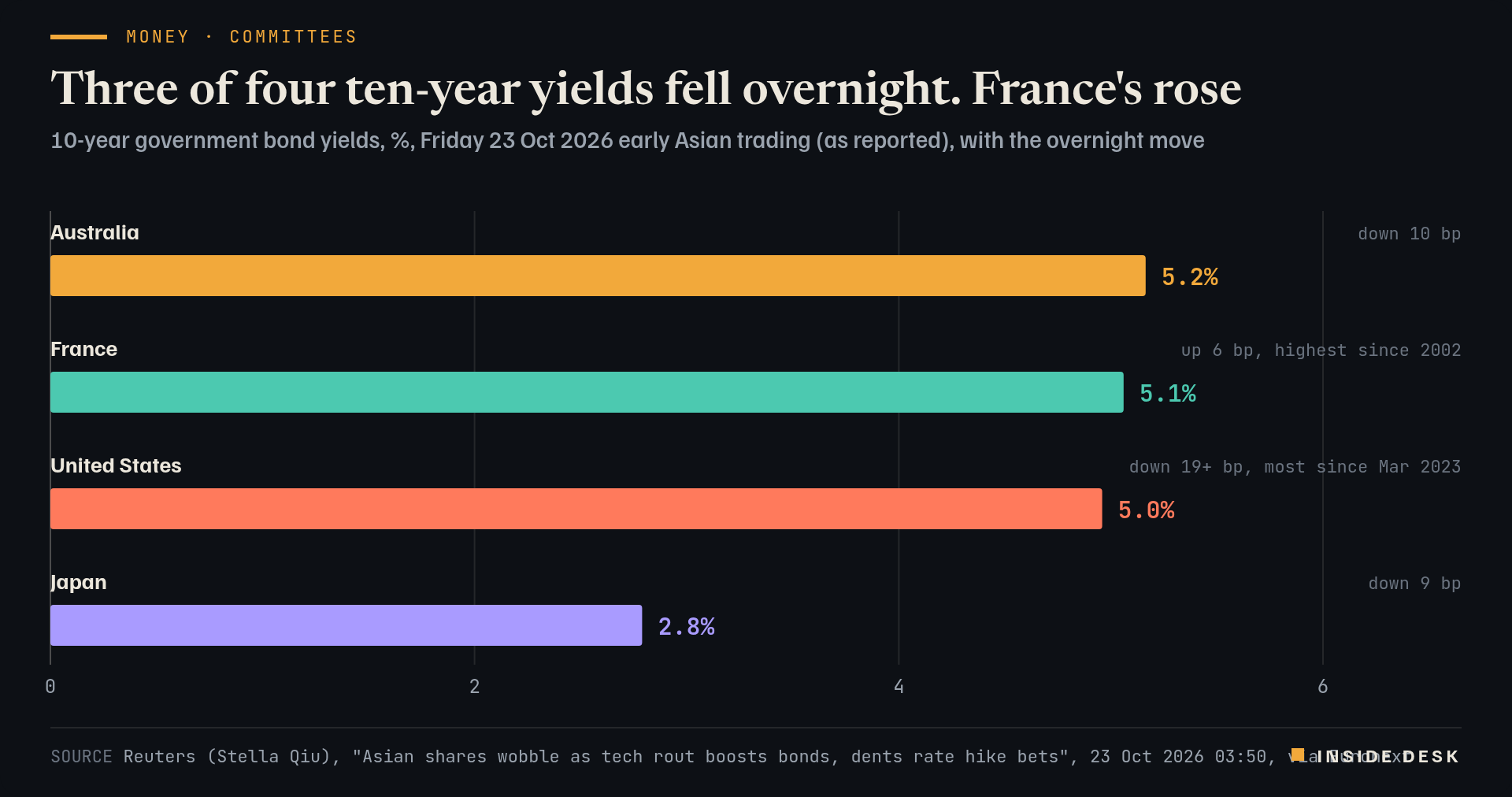
Three central banks meet next week. On Thursday a tech sell-off did some of their deliberating for them: the biggest Treasury rally since March 2023, a stronger yen, and half a hike priced out. France was the exception.
Next week three committees sit down. The Federal Reserve meets, the European Central Bank is expected to hold its deposit rate at 2.5%, and the Bank of Japan decides on Friday. On Thursday, before any of them had opened a briefing book, the bond market held its own meeting, and it voted for less.
The trigger was an invoice, not a speech. Meta reported negative free cash flow of $2.12 billion for the third quarter and raised the bottom of its full-year capital spending range to $135 billion, from $130 billion; the price of insuring its five-year debt reached an all-time high, CNBC reported. Reuters called it the company's first cash outflow in more than a decade. The Nasdaq Composite fell 2.6%, its worst day since June, and the S&P 500 1.2%, its worst since July.
The Nasdaq had its worst day since June after Meta's cash flow turned negative. The Dow closed flat, and Nvidia's chief said out loud what the bond market was pricing: money for the AI build-out is no longer unlimited.
Washington published the rulebook for American money going into Chinese, Russian, Iranian, Cuban and North Korean technology. It is not a ban on everything. It is a form, a list and a deadline, which is how serious policy usually arrives.
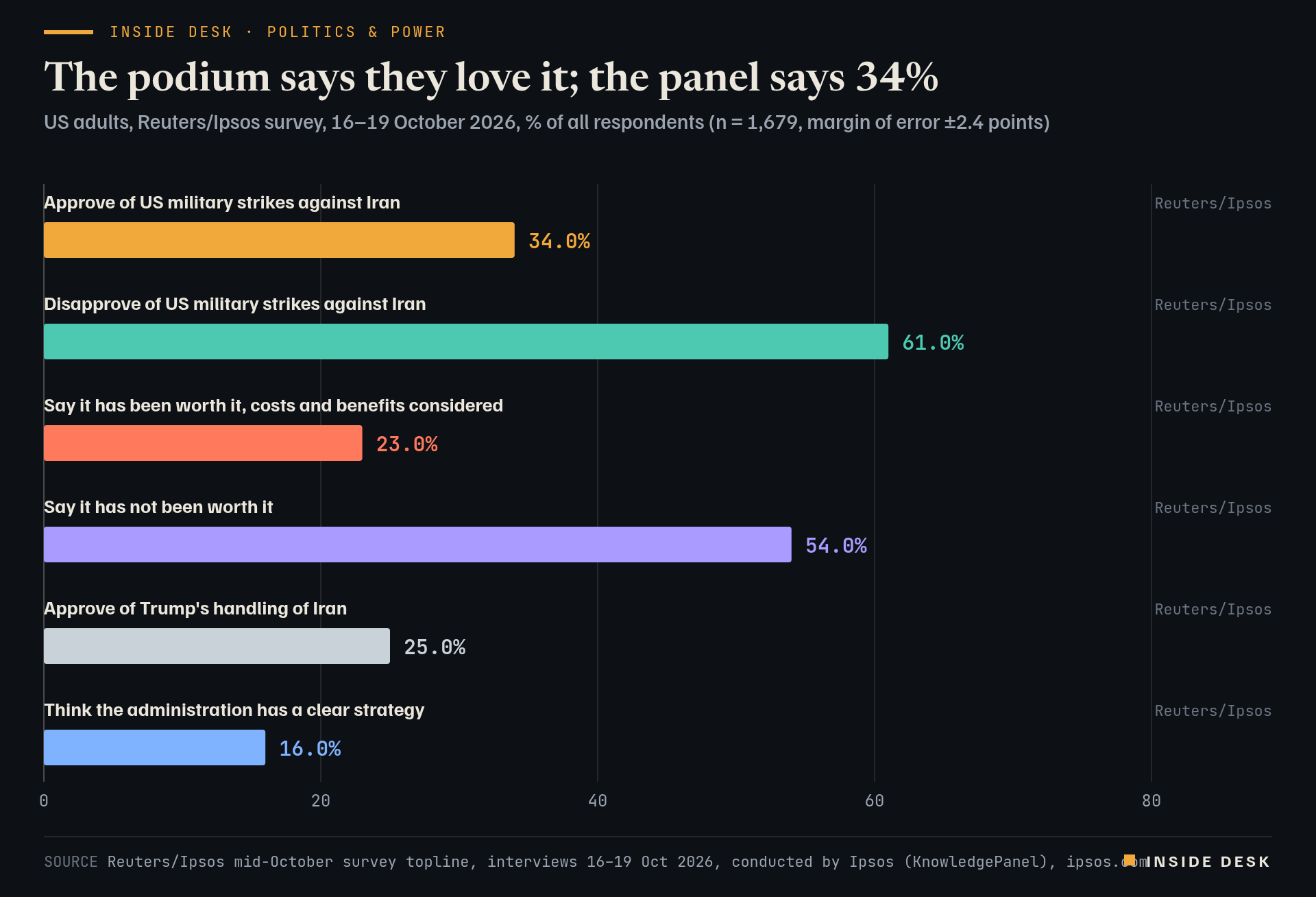
Asked how Americans feel about the Iran war, the president said that in one way they love it. The most recent Reuters/Ipsos panel, interviewed three days earlier, found a third approving of the strikes. He did leave himself a second sentence.
Two large family studies find that a child's aggression predicts less consistent discipline later, not the other way round. It is a finding that lifts some blame and asks for better help.
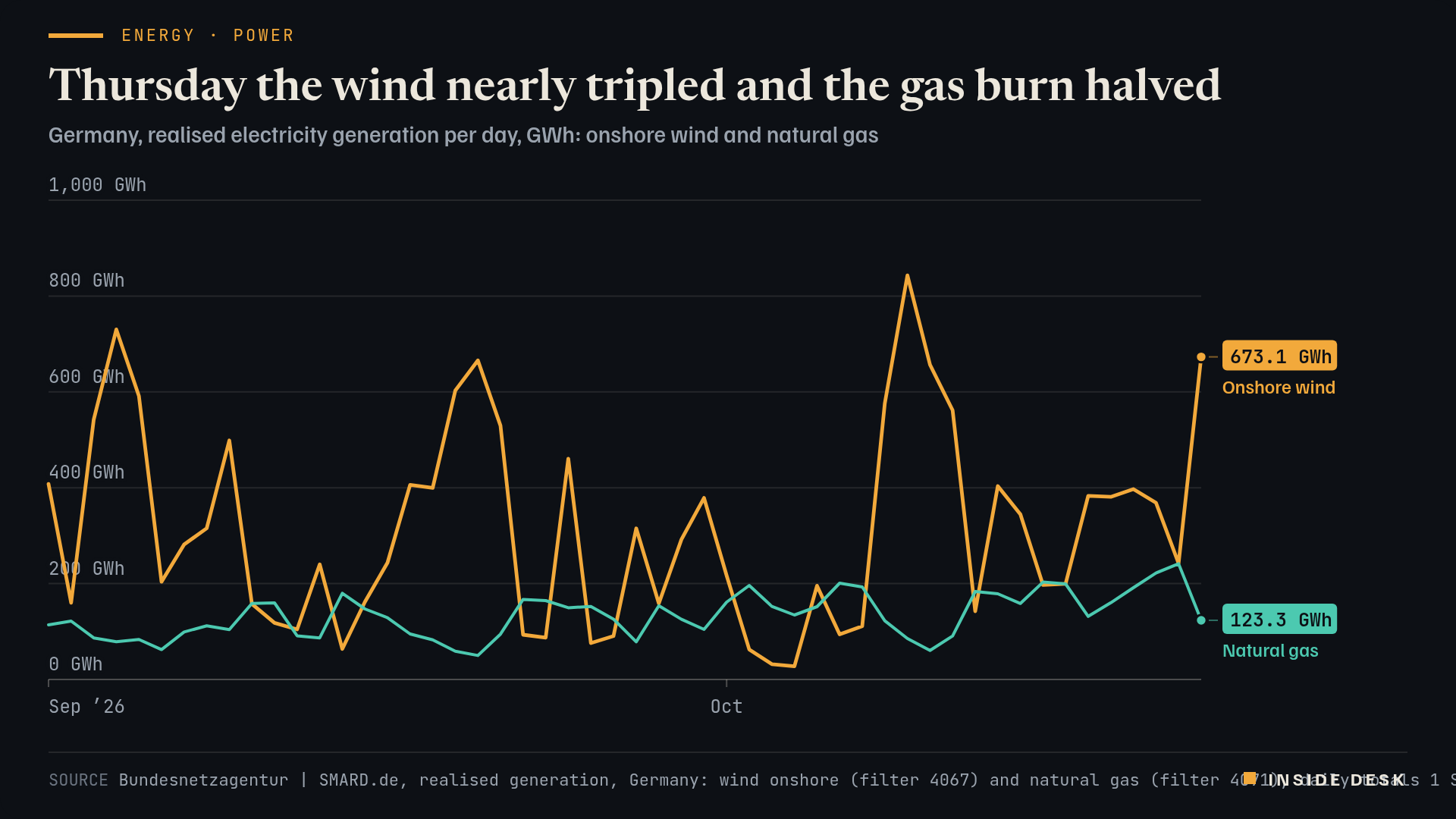
Brent settled at its highest since May on Thursday. The same day, German turbines nearly tripled their output, gas plants burned half as much as on Wednesday, and Friday's power cleared at €137.59.
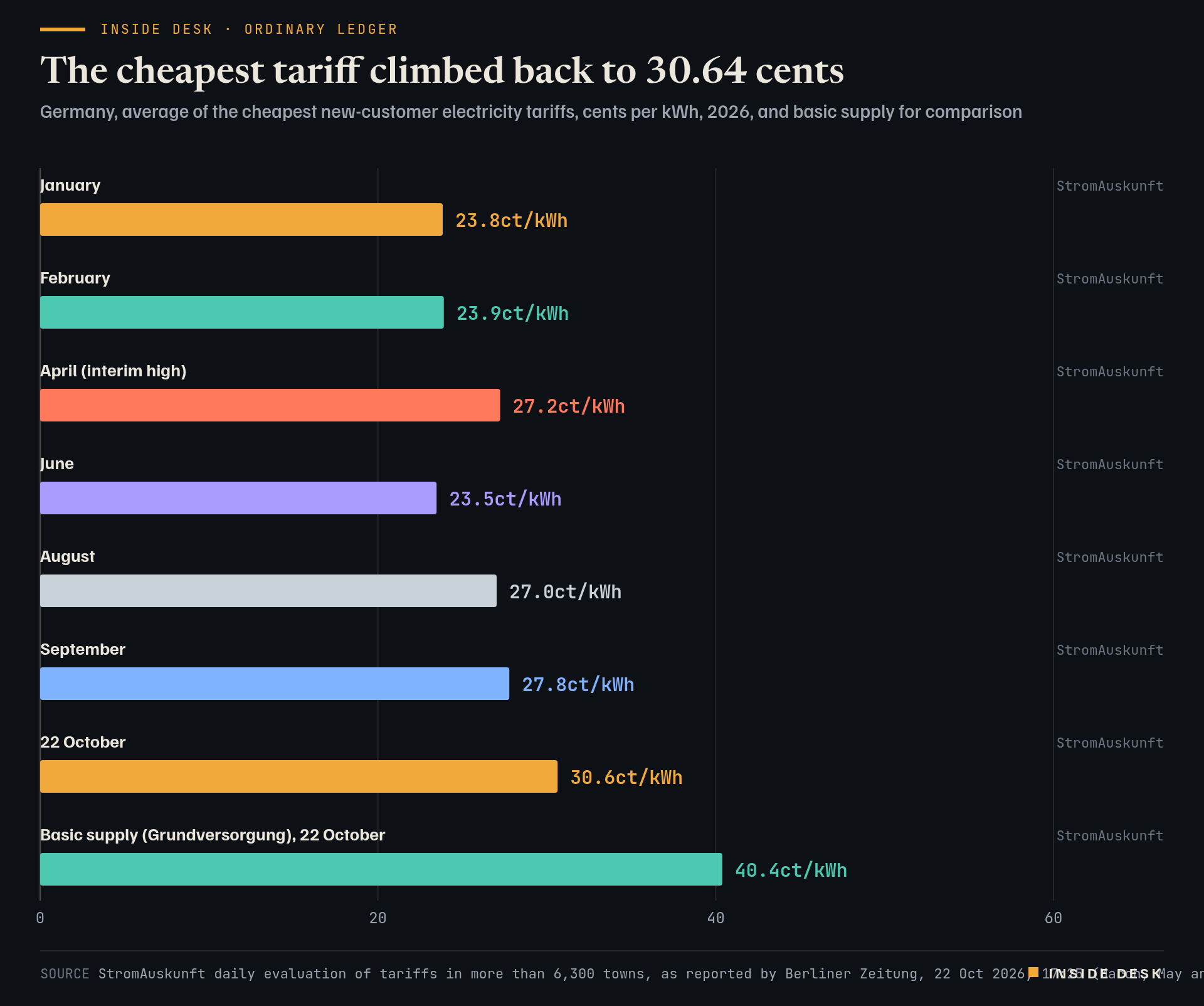
The cheapest new-customer electricity tariffs in Germany rose about ten per cent in a month, to 30.64 cents a kilowatt hour. Basic supply still sits almost ten cents above them.
Revenue up 55%, and most of the extra dollars fell straight through to operating profit. The release says why in four words: exabyte growth, improved pricing.
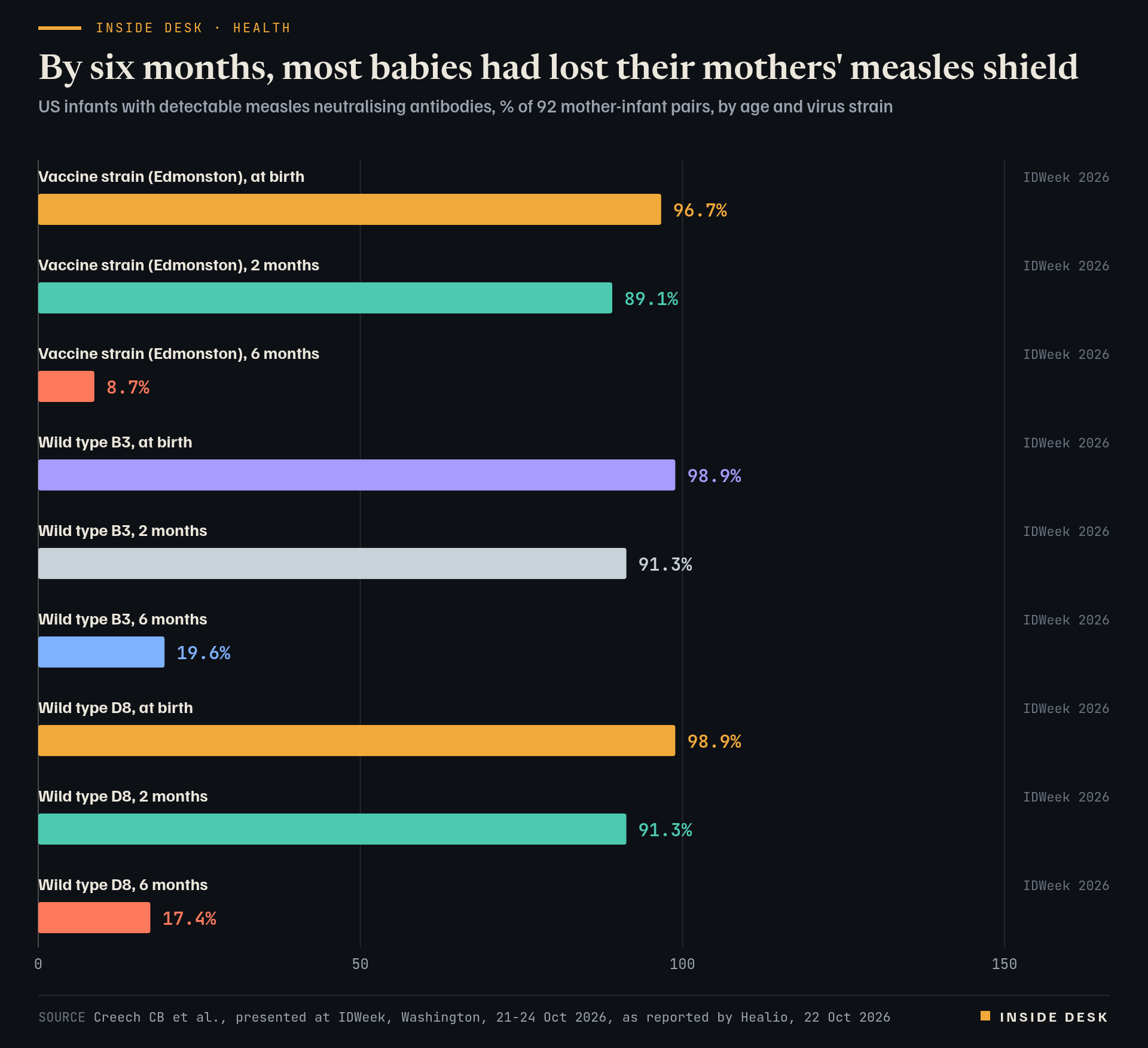
A study at IDWeek finds most US babies have lost detectable measles antibodies from their mothers by six months, half a year before the routine first dose. Public health labs, meanwhile, are asking for a faster test.
Overnight both capitals talked about going further. Tehran named airports and pipelines; Washington said it 'may do it a little bit further'. The number that limits both is not in any speech: how many interceptors are left on the shelf.
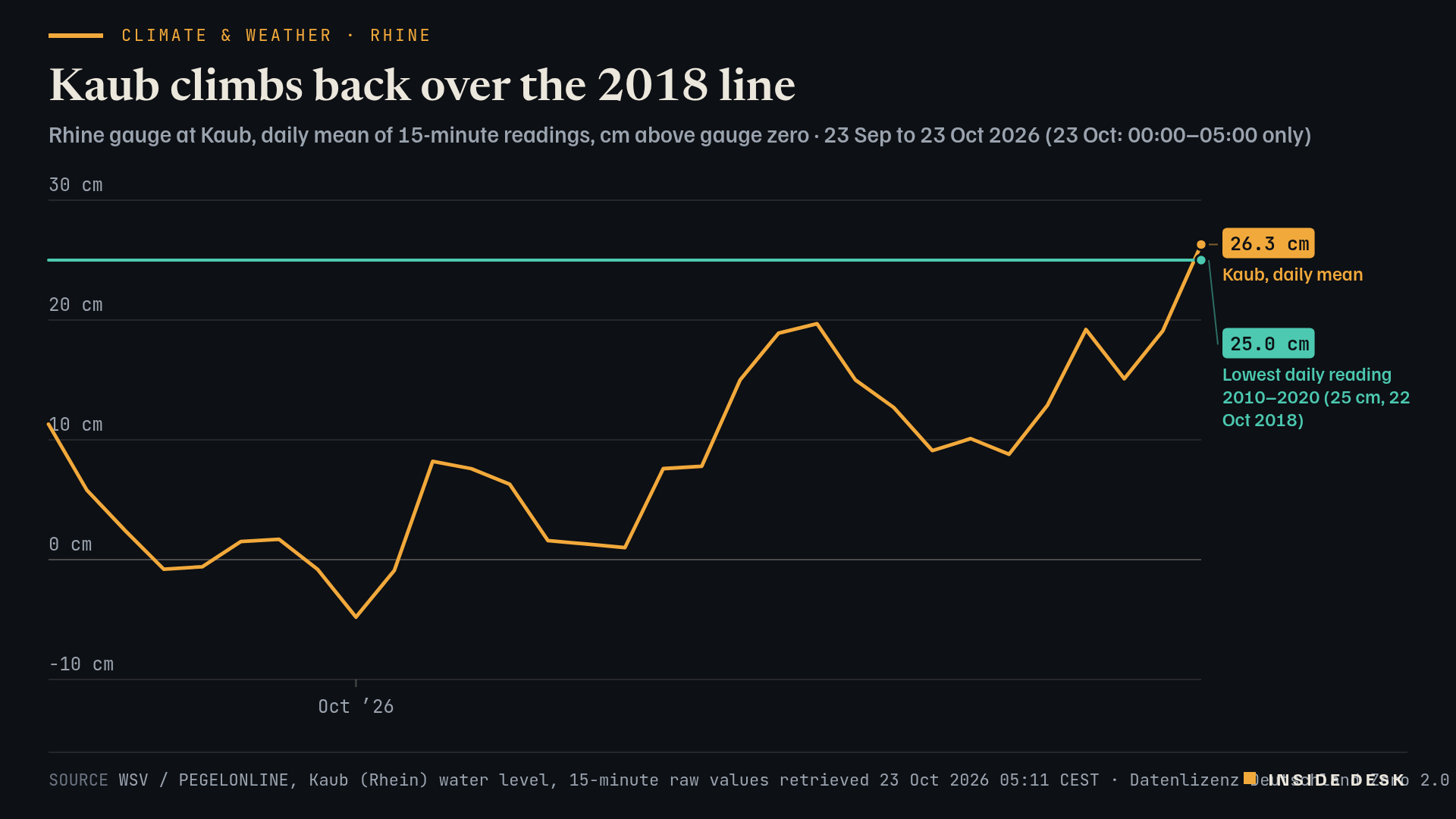
For a month every daily mean at the Rhine's bottleneck sat below the low of its reference decade. At 23:45 on Thursday the gauge read 26 cm. By 05:00 it read 28.
This week, find two lines on your electricity paperwork: the price per kilowatt-hour you actually pay and the date your contract can end. Write them down somewhere you will see them again. Today's Ordinary Ledger shows how far apart the cheapest new-customer tariff and basic supply can sit; knowing your own two numbers makes the next headline about tariffs easier to read.
A habit, not advice. Nothing here tells you what to buy, sign or switch.
What went right
Kenya says it traced 135 contacts of its first Ebola death and has accounted for all of them, "100 per cent" in the health ministry's words 1. Contact lists that close completely are the dull, decisive work of containment.
The day in one sentence
When tech shares fell, bonds caught the drop; in Germany the wind cut the wholesale power price by about a third in two days, and the Rhine at Kaub climbed back over its 2018 low.
In euros at home
Heating oil costs €172.71 per 100 litres on Friday's German average for a 3,000-litre order, unchanged on the day, €3.42 more than a week ago and €38.67 more than three months ago 2. Desk arithmetic: a 3,000-litre delivery costs about €5,181 today, some €1,160 more than the same order three months ago.
Desk arithmetic on the cited average price. Local prices differ by region, quantity and supplier. Nothing here is advice.
Small words
Basis point
One hundredth of a percentage point, the unit bond markets use for small moves in interest rates. When the US ten-year yield fell by more than 19 basis points overnight, its biggest fall since March 2023, it dropped by roughly 0.19 of a percentage point; on Friday it stood at 4.9591% 3.
Commentary for information only. Not investment, legal, tax, medical or political advice. "Desk arithmetic" is our own calculation from the cited figures.