Evening edition · Thursday, 22 October 2026 · 17:30 CEST
The price is for the risk, not the barrel.
Oil rose on what might happen, not on what did. Germany paid more for power while burning less gas, Paris paid more than Washington to borrow, and the Rhine at Kaub has spent a month below its 2018 low. Eleven desks, every number sourced.
Morning 08:30 · Evening 17:30 · Sunday 10:00, Berlin time
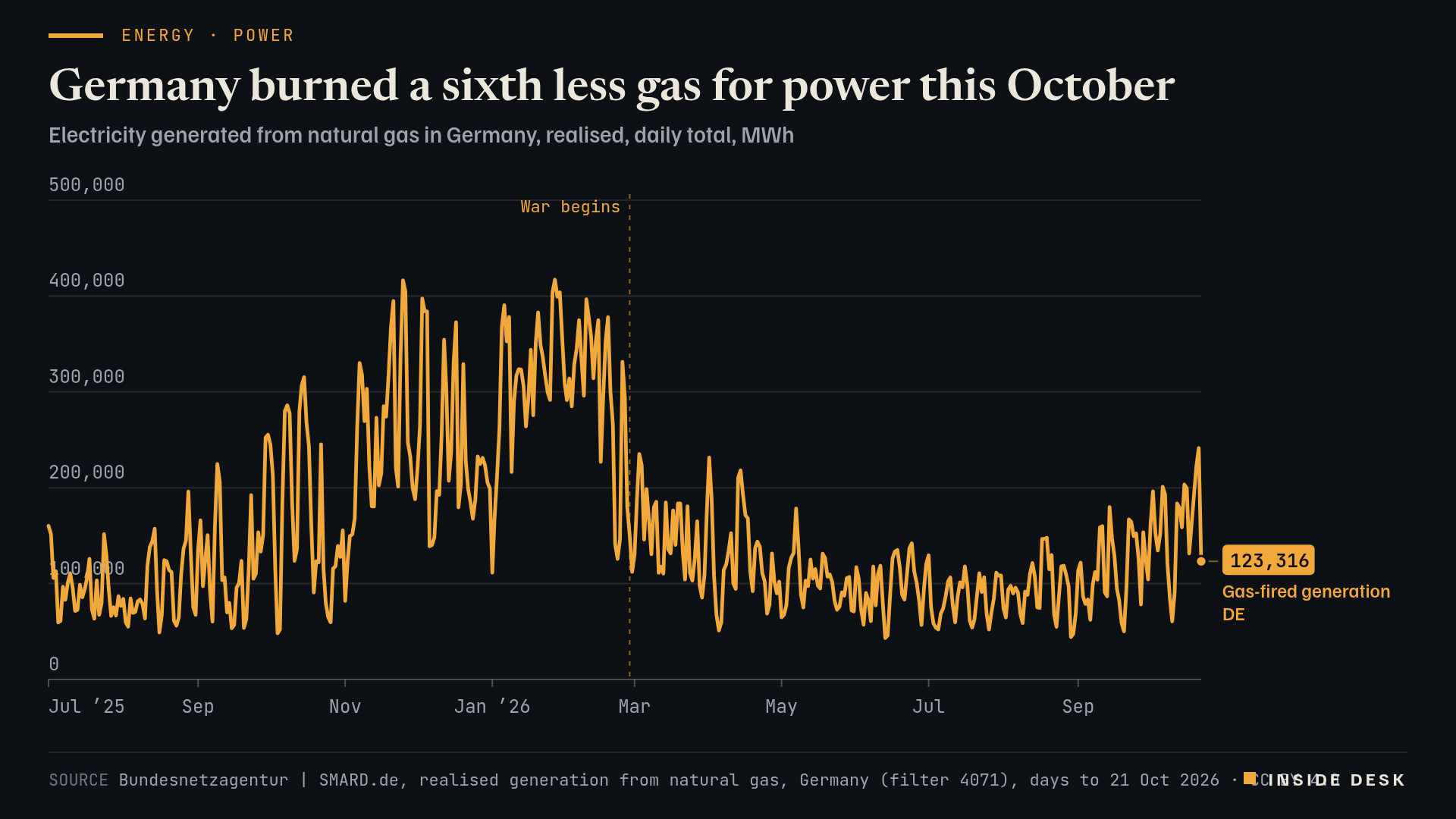
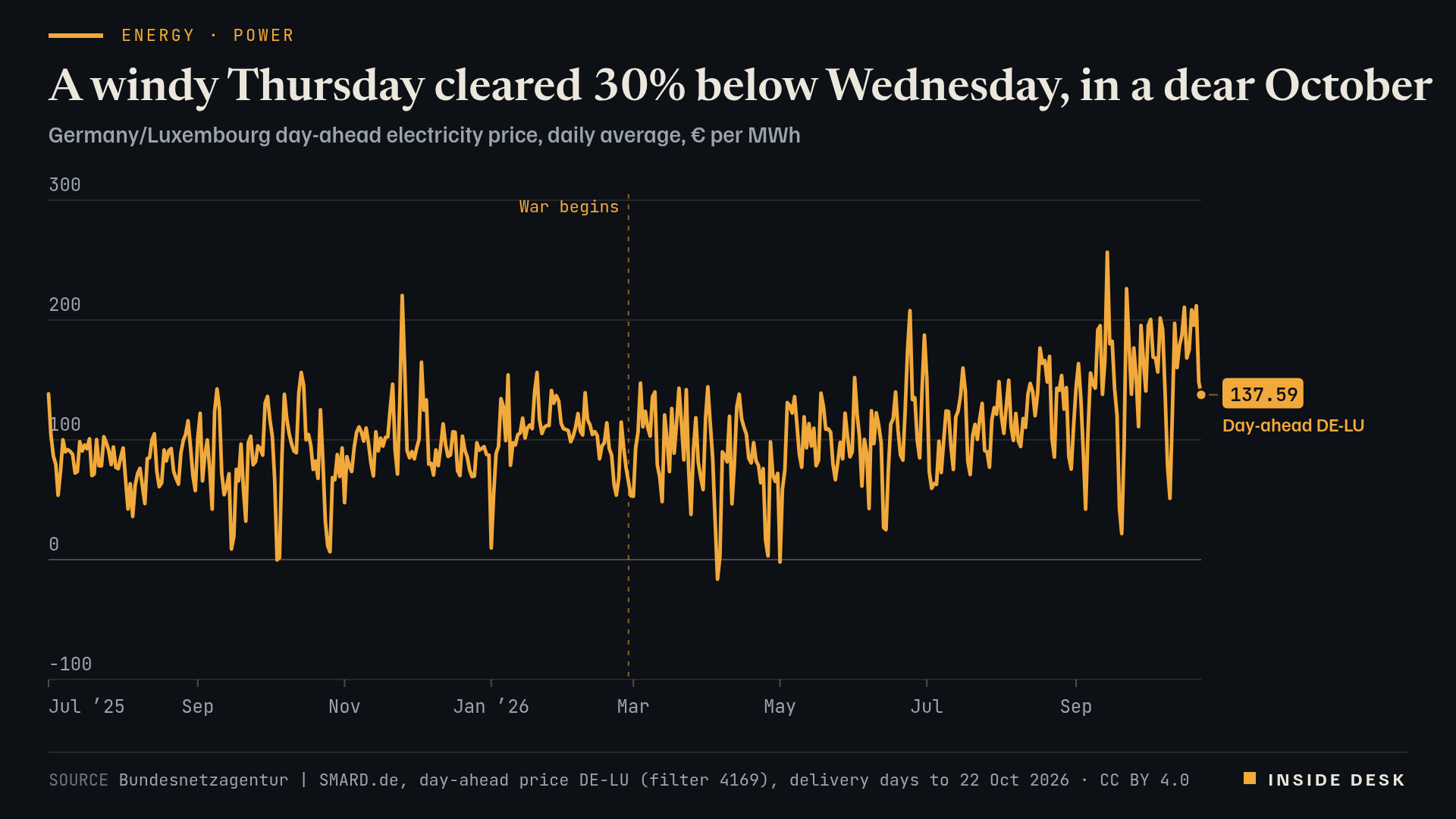
Brent hit a five-month high while the Gulf's barrels kept moving. German power plants burned a sixth less gas this October, and power still cost about 80% more than a year ago.
Brent crude futures rose $3.19, or 2.9%, to $112.01 a barrel by 13:11 GMT on Thursday, after touching $112.68, the highest since 18 May, Reuters reported. The triggers were the ones you have read about all week: more Houthi strikes in Saudi Arabia, and Iran's Revolutionary Guard saying four vessels in the northern Gulf were hit and set on fire and three more struck mines west of the Strait of Hormuz. On Thursday, six people told Reuters, Saudi Aramco told staff to leave its Dhahran headquarters and work from home.
Here is the part the headline leaves out. The barrels are moving. Kpler data show oil exports from the Persian Gulf above their pre-war levels, the Guardian reported, partly because more crude now travels overland by pipeline to the Red Sea and the Gulf of Oman. Morgan Stanley put Middle East crude exports at about 17 million barrels a day last week. "Reports of Middle East crude oil exports exceeding pre-conflict levels are more than countered by attacks on ships in the Strait of Hormuz and the Houthi strikes on Saudi Arabia," said Tamas Varga of PVM Oil.
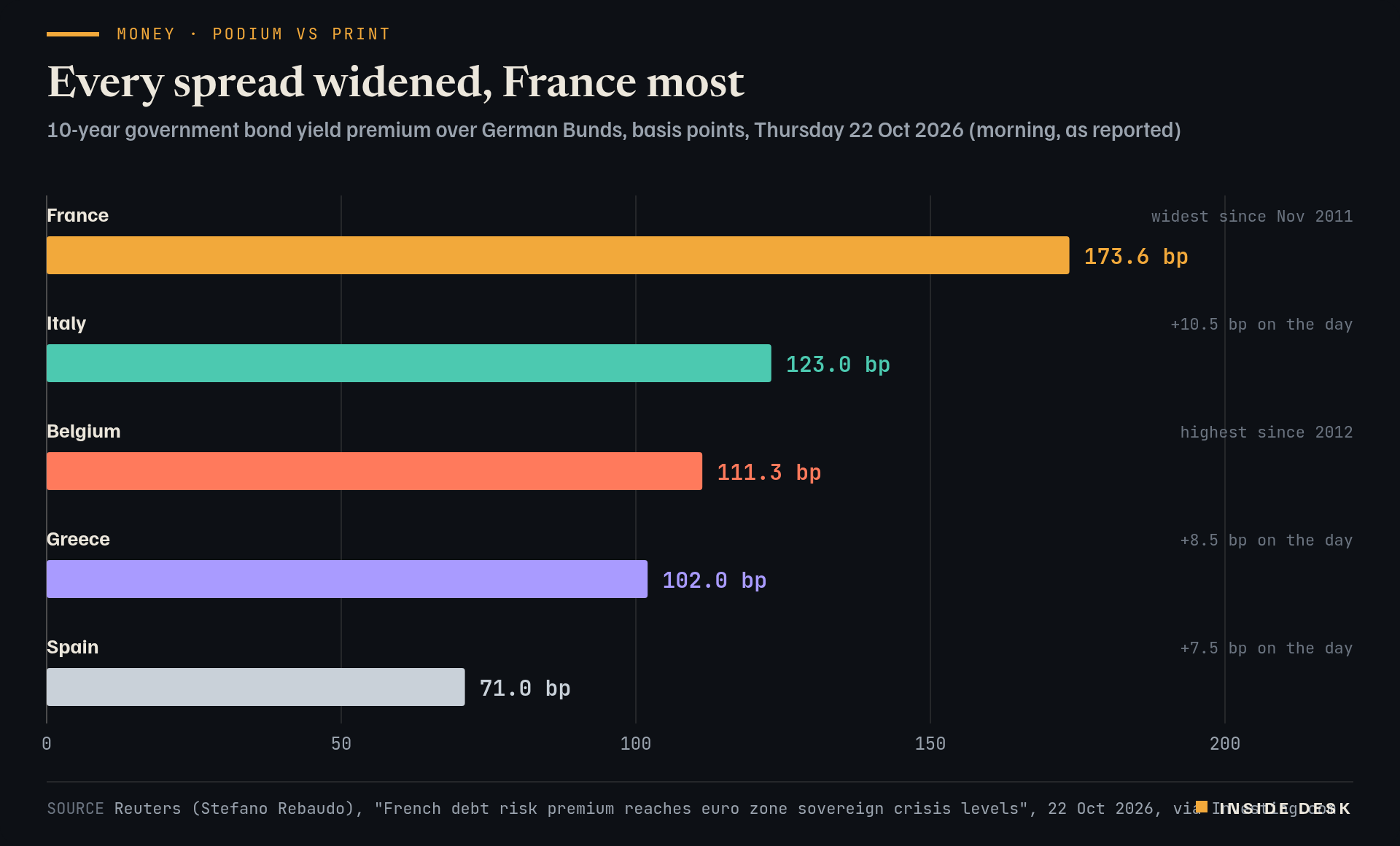
On Thursday the US 10-year yield fell towards 5% while France's rose through it. Stocks fell on both sides of the Atlantic, and the bond market sorted borrowers by their budgets.
The US president says the Iran war will end very soon, one way or the other. By mid-afternoon on Thursday the Strait of Hormuz had seen four visible commercial crossings. Soon is a word; four is a count.
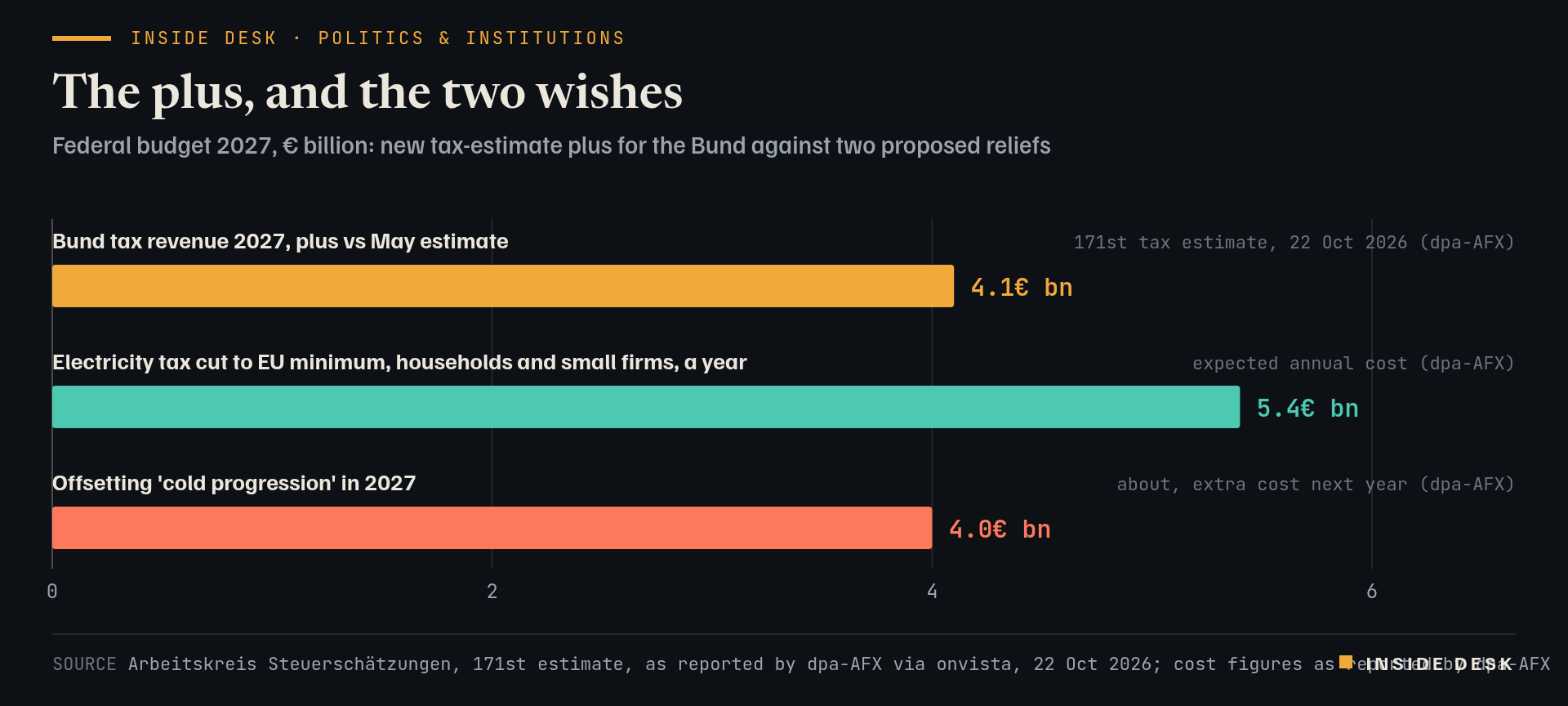
Ten days ago the chancellor said one point of extra growth gives the room to cut the electricity tax for everyone. Today's tax estimate found the growth, and the finance ministry found no room. Both are telling the truth about different lines.
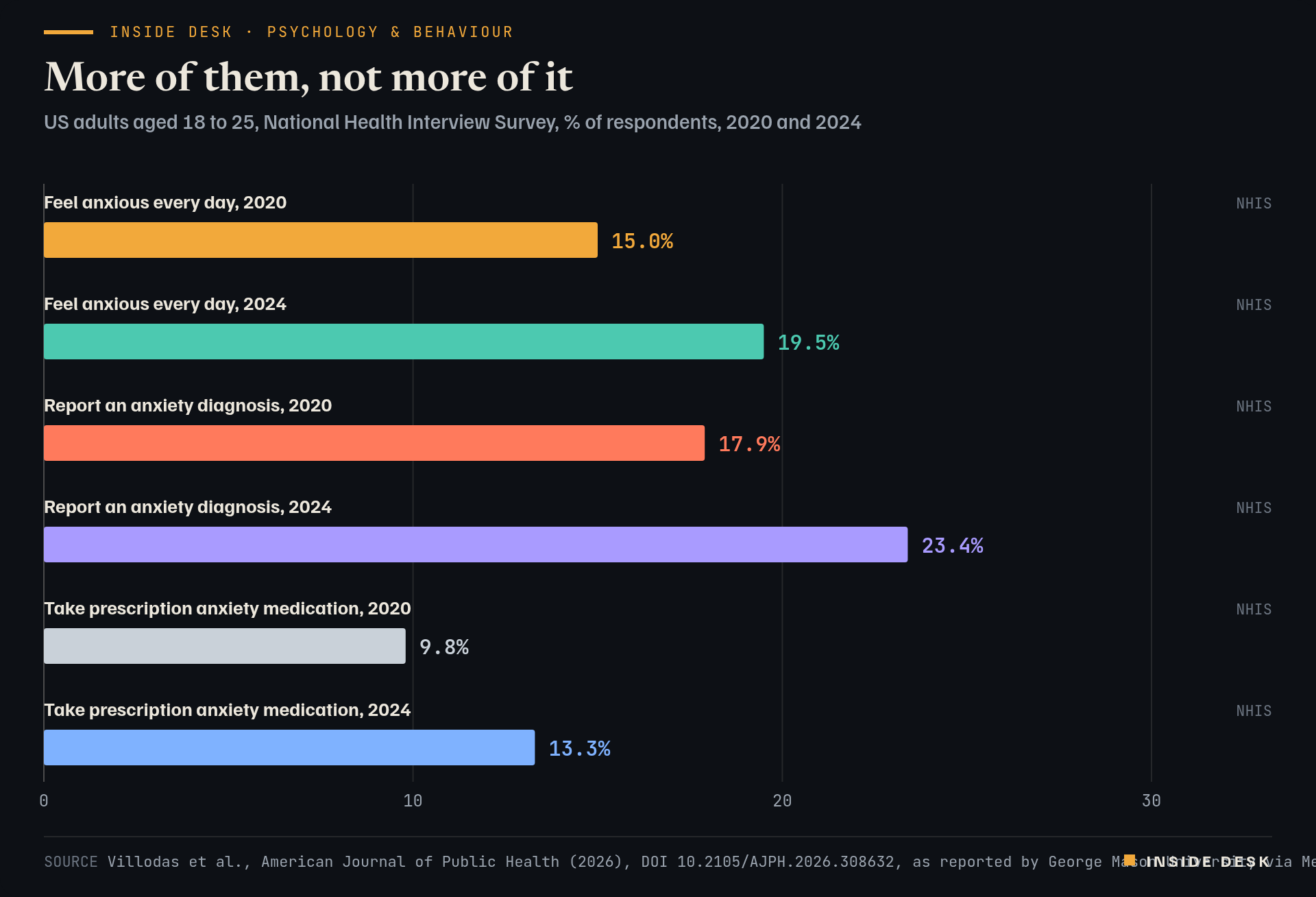
A US survey study finds daily anxiety among 18- to 25-year-olds rose from 15% to 19.5% between 2020 and 2024, while its reported intensity did not. The rise is in how many, and in who gets a name for it.
Six days ago the Banque de France governor said the conditions for ECB help were not met. On Thursday France paid 173.58 basis points over Germany, and every other spread widened with it. He may still be right; the test he set is the one to watch.
The Deutschlandticket goes to €66.80 a month in January. A pay-per-ride version for occasional travellers was taken off the transport ministers' agenda without debate. And the Länder say €14 billion more is needed just to keep today's trains running.
Texas Instruments grew revenue 28% and spent less than half as much on plant as a year ago. Free cash flow more than tripled. Some of it was a government cheque, and the release says so.
Congo passed 9,700 confirmed cases. The WHO's Africa office says about six in ten recent deaths happened outside treatment centres. That is a statistic about distance and trust, and it can be worked on.
After his security council, the president said the general recommendation was no demonstrations at all. By two o'clock a Paris judge had suspended a police ban, and the march set off from a hospital gate. That is how a rule of law is supposed to work under pressure.
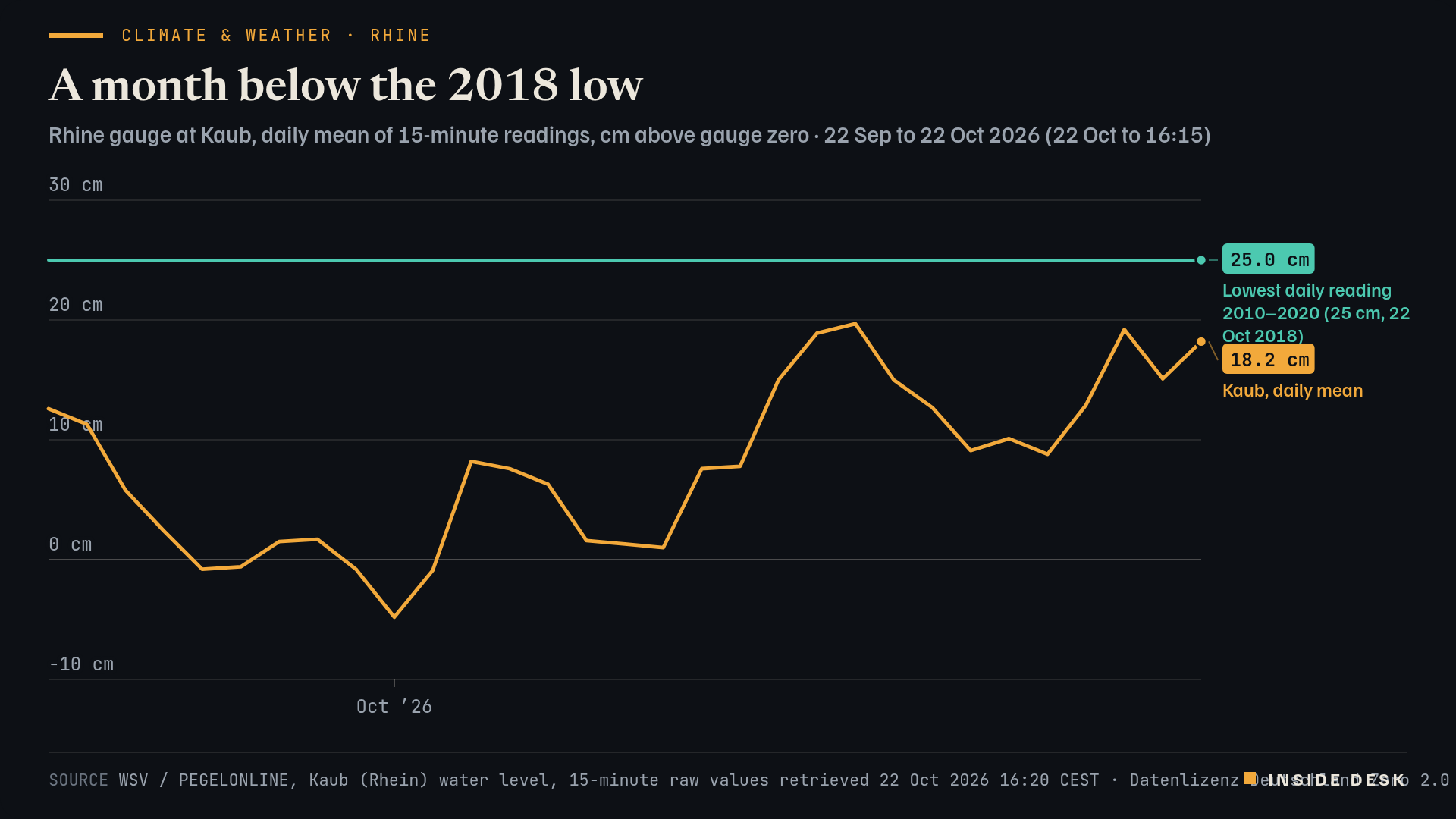
Eight years ago today the Rhine at Kaub set the low of its reference decade, 25 cm. Every daily mean of the past 31 days has been below it. The storms are coming to the west, not to the Rhine.
This weekend, write down one reading from your own home: the gas or electricity meter, or the level in the oil tank. Do it again next weekend. Tonight's edition is full of gauges, from the Rhine at Kaub to the spread on French bonds, and the one in your hallway is the only one that tells you about your own winter.
A habit, not advice. Nothing here tells you what to buy, sign or switch.
What went right
Employers in the United States are still not letting people go. Initial claims for unemployment benefits fell to 194,000 in the week to 17 October, against 200,000 expected, close to the lowest levels since the late 1960s 1. In a week of oil spikes and bond nerves, the dullest form in the system said the job you have is fairly safe.
The day in one sentence
Oil got dearer because of what might happen rather than what did, Germany paid more for power while burning less gas, and France now pays more than the United States to borrow.
In euros at home
Heating oil cost €172.72 per 100 litres on Thursday's German average, 0.38% less than on Wednesday, €2.34 more than a week ago and €39.50 more than three months ago 2. Desk arithmetic: a 3,000-litre delivery costs about €5,182 today, some €1,185 more than the same order three months ago.
Desk arithmetic on the cited average price. Local prices differ by region, quantity and supplier. Nothing here is advice.
Small words
Spread
The extra interest one government pays over another to borrow for the same length of time, here measured against Germany. On Thursday France paid 173.58 basis points (1.7358 percentage points) more than Germany for ten-year money, the widest gap since November 2011 3. A basis point is a hundredth of a percentage point.
Commentary for information only. Not investment, legal, tax, medical or political advice. "Desk arithmetic" is our own calculation from the cited figures.