The Sunday long read: the second Saturday was counted, not shouted
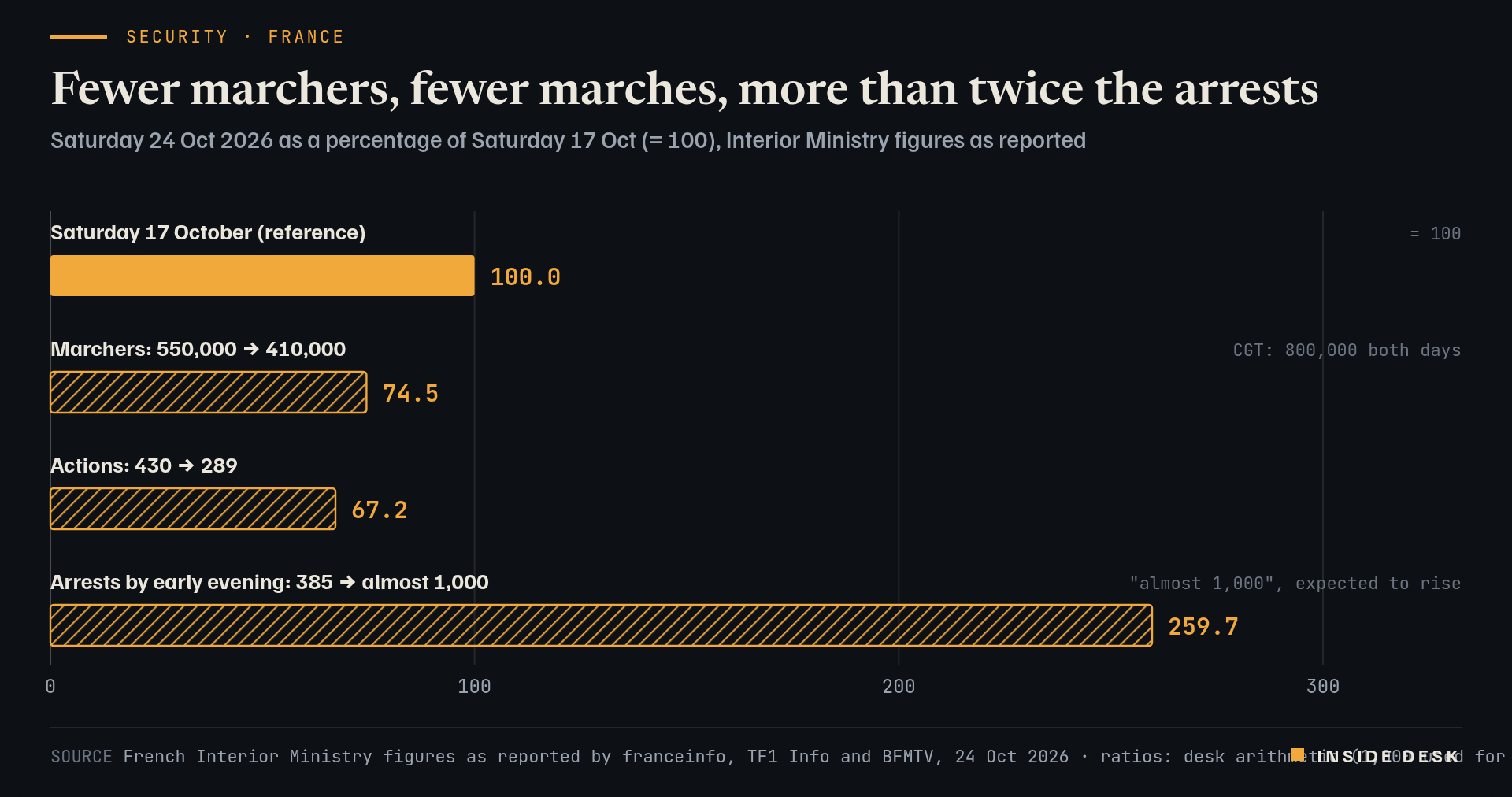
France marched again. Fewer people came, fewer marches were held, more than twice as many were arrested and the public buildings stood. The story is in the count, and the count is an institution.
Every large protest produces two numbers before it produces an argument. One comes from the Interior Ministry, the other from the unions, and the distance between them is where the evening's television lives. On Saturday the two were 410,000 and 800,000. Last Saturday they were 550,000 and 800,000. The interesting fact of the week is not either number. It is that both sides kept counting, the same way, a week apart, so that you can compare them.
**What the ministry counted.** By its own figures, 410,000 people marched across France on 24 October in 289 actions, against 550,000 in 430 actions on 17 October. In Paris the prefecture counted 110,000; the CGT said 250,000. In Marseille, where a march went ahead "à titre dérogatoire", by exception, the prefecture counted 17,000 and the CGT 100,000. In Rennes, 11,500 people gathered despite a ban. In Orléans, where the Rassemblement national was holding its congress, 13,500 people marched against the party and the minister reported no incidents.