Sunday long-read · Sunday, 1 November 2026 · 10:15 CET
The week was written in ship counts
Speeches about Hormuz filled the week; the paperwork counted 277 transits, a contract that expired $4.21 above its successor, and two central banks that held and pointed at December. November opens with a heating bill worth reading.
Morning 08:30 · Evening 17:30 · Sunday 10:00, Berlin time
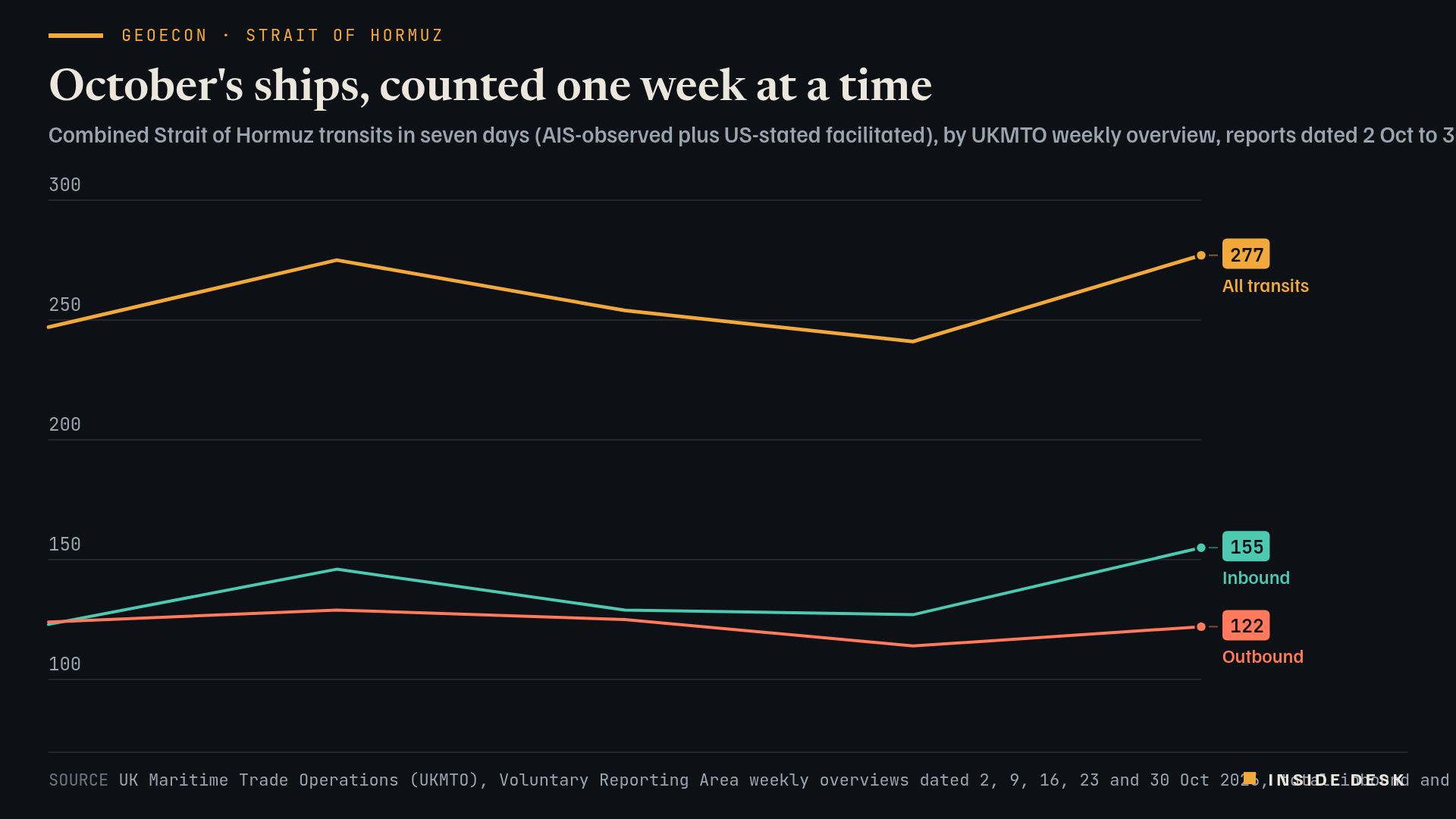
Speeches about Hormuz, Iran and Russian diesel filled the week. The paperwork told a steadier story: 277 transits, a contract that expired $4.21 above its successor, and General License No. 135, with three tankers of Russian diesel due on the US East Coast by about 11 November.
There were two weeks in the Gulf this week. One was spoken. It had a vice-president's letter, a supreme leader's call to end "the impasse", Qatari mediators flying back to Tehran barely a day after leaving it, and reports that Washington and Israel are preparing for possible military action after Tuesday's US midterm elections. The other was written down. It had a weekly ship count from a British maritime office, an expiring oil contract, and a six-month permit from the US Treasury with a number on it. This long read is about the second week, because the second week is the one you pay for.
**The count.** Each Friday in October, UK Maritime Trade Operations, the British maritime security office that takes reports from merchant ships, has published a two-page overview of the Strait of Hormuz. On 30 October it counted 122 outbound and 155 inbound transits over seven days, against 114 and 127 the week before. It called that "approximately 70% below pre-conflict levels". Desk arithmetic: 277 transits against 241 is 36 more ships, a rise of about 15%, and the highest weekly total in the five overviews UKMTO published in October.
Michigan's final October reading barely moved. Underneath, Americans felt a little better about next year and a lot worse about buying anything big today.
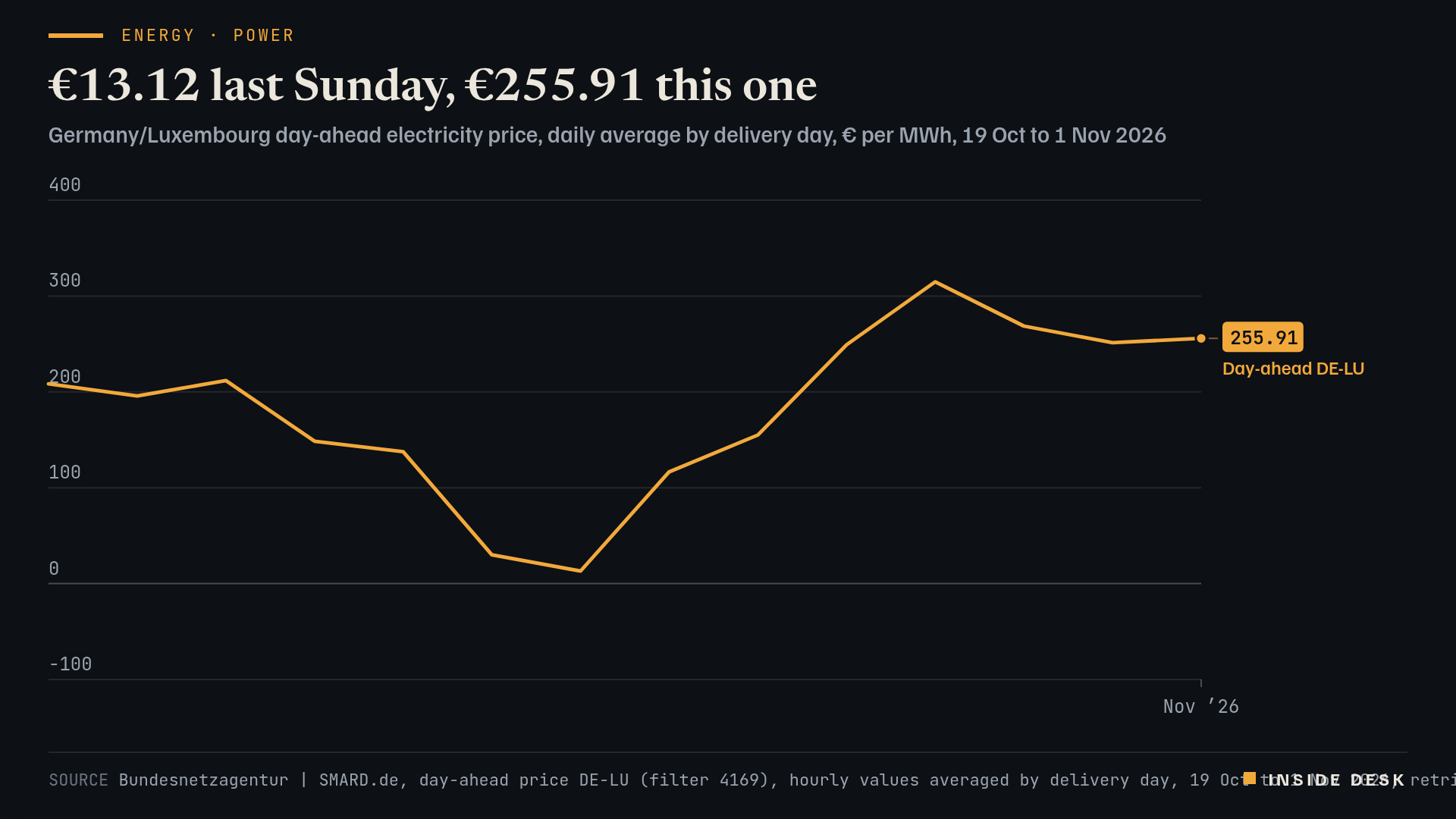
Two Sundays, one week apart, and the same quiet day of the week priced nearly twenty times higher. The storm left; the wind went with it; the bill came back.
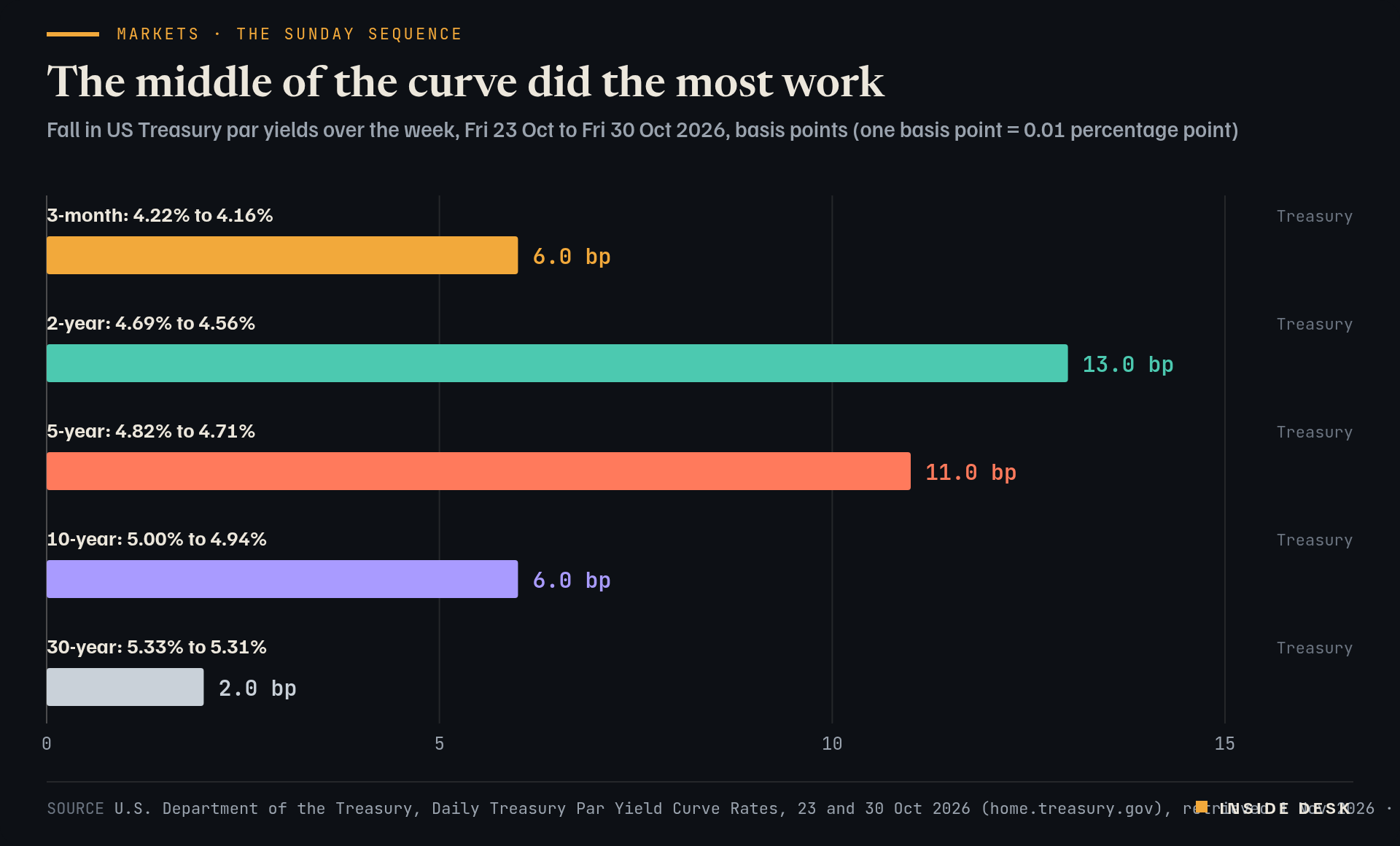
The Fed held with two hands up for a hike. The ECB held unanimously after debating one. Neither said yes; neither said no; both told you when they will look again.
November starts the heating season. The household ledger has three lines to check this week: the gas tariff, the fuel board and the date your tank rebate runs out.
Friday's 29% fall was about a forecast. The quarterly report, filed alongside it, is about where the money came from and where it has been promised to go.
Germany's two most familiar screening offers are under formal review, and this week the experts were asked for their evidence. Until the end of 2027, nothing you are entitled to changes.
Washington has approved the Patriot missiles Kyiv has been asking for. The notice is precise about who pays. It says nothing about when they arrive, and that silence is the real news.
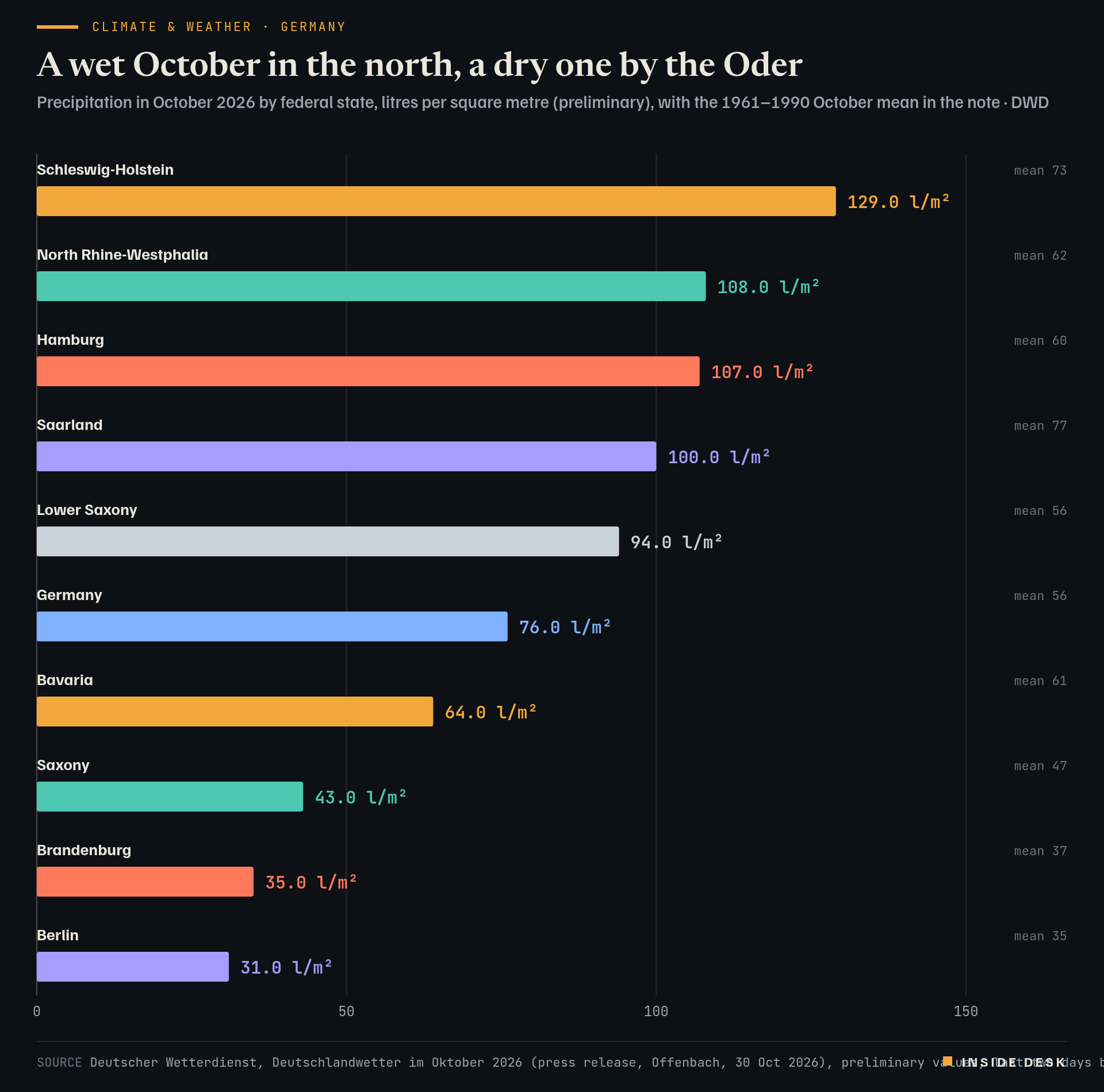
Germany's weather service has closed the books on October: warm, sunny, wetter than usual, and so unevenly wet that the north got three times what the east did.
The heating season starts in earnest this month. Once this week, find your gas or electricity contract and write three things on one sheet of paper: the price per kilowatt-hour, the monthly base charge and the date the price guarantee ends. Put the sheet where the post arrives. When a letter about new prices comes, you will already know what you are comparing.
A habit, not advice.
What went right
Deutsche Bahn's family ticket was meant to be a summer-holiday offer. Demand was high enough that from 1 November it is permanent: €99.99 for a return journey for up to five people, with an ICE seat reservation included 1. A good idea was tried, people used it, and it stayed. That is how public services are supposed to learn.
The day in one sentence
Shares rose three days on a prospectus and fell two on the accounts, two central banks held and pointed at December, and at home November opened with a dearer parcel, a cheaper family train and a heating bill worth reading.
In euros at home
Verivox puts a new gas contract at about 14 cents per kilowatt-hour for a household using 20,000 kWh a year, as of 30 October; the average across all customers was about 12.7 cents on 1 October 2. Desk arithmetic: at 14 cents that household pays €2,800 a year, at 12.7 cents €2,540, so the gap between a new contract and the average one is about €260 a year, or roughly €22 a month.
Desk arithmetic on the cited figures.
Small words
Hawkish pause
When a central bank leaves interest rates where they are but makes clear it may raise them soon, markets call it a hawkish pause. The ECB did that on Thursday: no change, but its president said a hike had been discussed and the direction was clear. The pause is real; so is the warning that comes with it.
Commentary for information only. Not investment, legal, tax, medical or political advice. "Desk arithmetic" is our own calculation from the cited figures.