POLITICS · LEAD
Germany's tobacco tax law came into force on Wednesday by mistake, more than two months early on paper. Within hours the customs administration had published what still applies, and the finance ministry had started a correction. The error is embarrassing; the repair is the part worth watching.
On Tuesday the federal law raising Germany's tobacco tax was published in the Federal Law Gazette. It sets out steps up in the tax for 2027 to 2030. Its final clause reads: "This law enters into force on the day after its promulgation". That day was Wednesday, 21 October 2026. Read literally, the higher rates applied from this morning, more than two months before anyone intended.
The finance ministry confirmed the error on Wednesday. Bild had reported it first. A spokesman called it a technical mistake in the date of entry into force. At the government press conference, the ministry added a detail that matters more than the apology: the error was already in its own draft bill, and it was not caught anywhere in the procedure, in government or in parliament. Asked how many people had read the text, the ministry said the number of hands and eyes could not be counted on two hands.
Politics & Institutions · 4 min · Read the piece →
MARKETS · DESK NOTE
A Ray-Ban maker jumped about 15% and a supermarket chain fell about 14% on the same Wednesday morning. Both moves came from quarterly figures, and one of them priced the French curfews into a forecast.
Markets & Macro · 2 min · Read the piece →
GEO-ECON · DESK NOTE
A tanker was hit by an unknown projectile near the Strait of Hormuz on Wednesday morning, and by mid-afternoon an open ship-tracking counter had logged nine commercial crossings for the day. Both facts are true, and neither is the whole picture.
Geo-economics · 2 min · Read the piece →
PSYCHOLOGY · DESK NOTE
A Stockholm trial pitted a few nurse visits against guided self-help therapy for stress. The therapy did better, the nurses failed the statistical bar they were set, and both groups were markedly less stressed a year later.
Psychology & Behaviour · 2 min · Read the piece →
ENERGY · PODIUM VS PRINT Chart
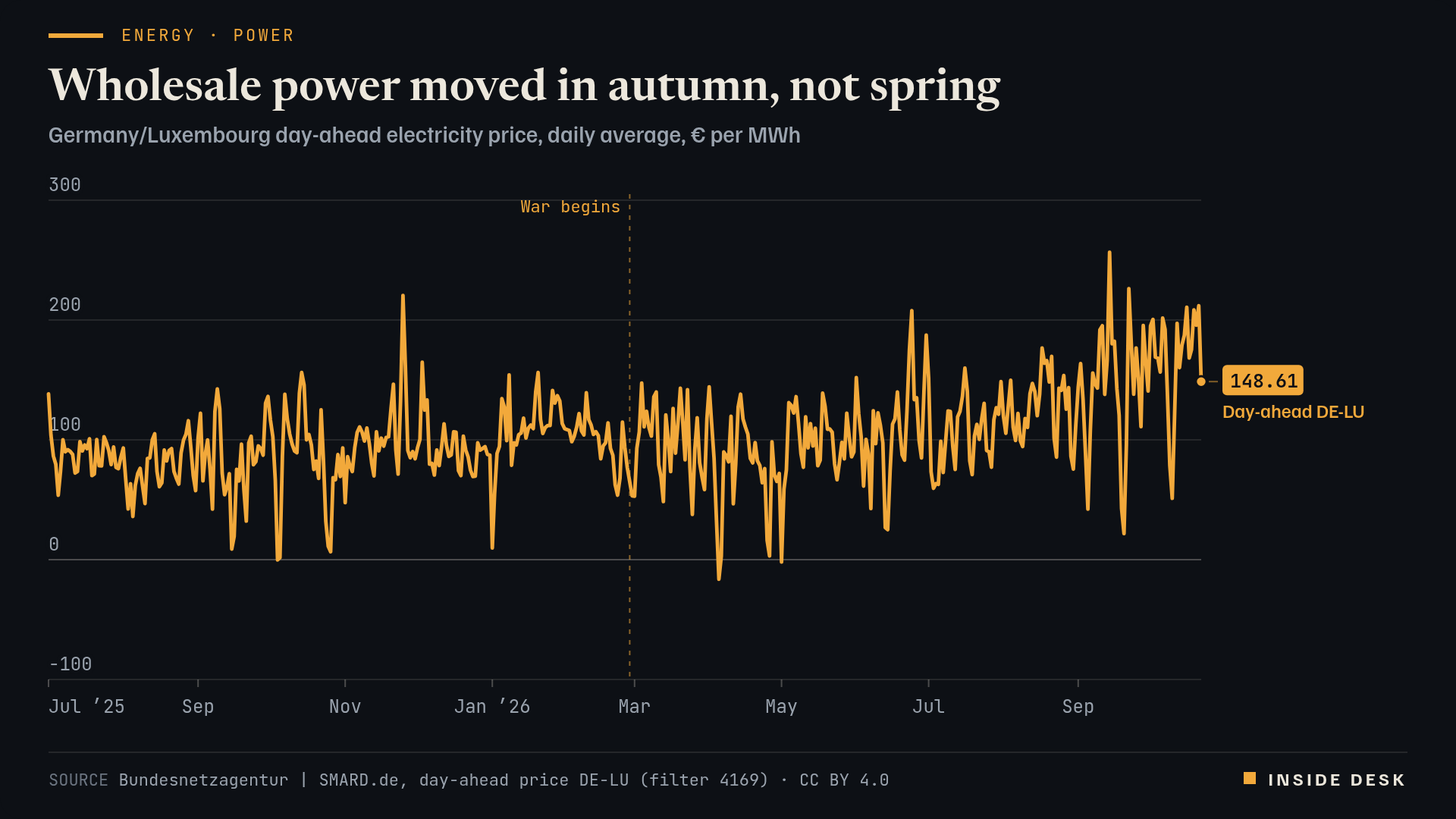
An ECB blog published on Wednesday says renewables are pulling wholesale electricity prices down in many countries. Germany's day-ahead auction says October has so far cost about 80% more than the same days last year. Both are true, and the gap between them has a name: grids.
Energy & Industry · 2 min · Read the piece →
MONEY · DESK NOTE Chart
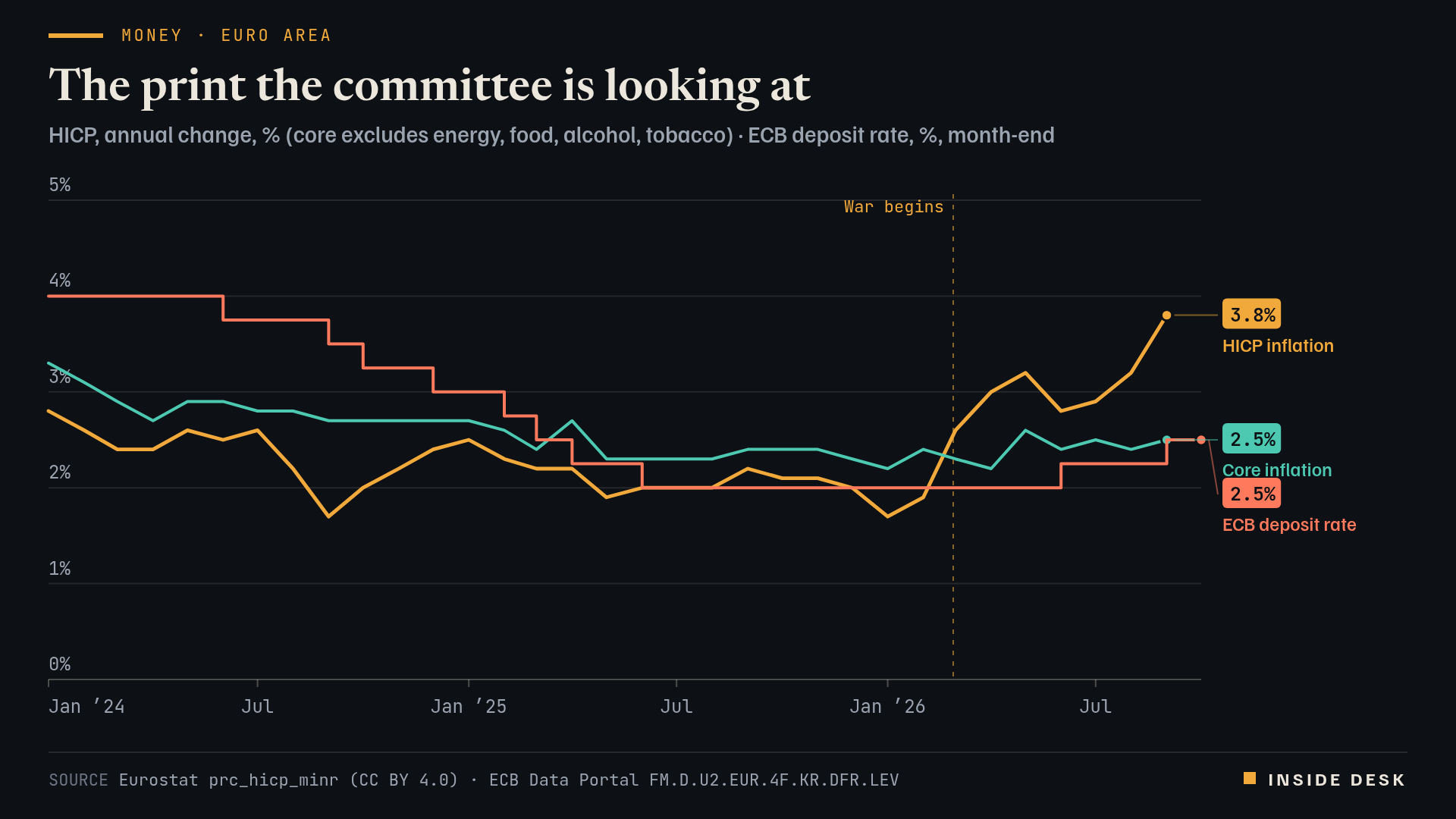
UK inflation rose to 3.5% in September on motor fuels, while core prices moved less. The euro area showed the same split a week ago. Eight days before the ECB decides, the useful number is the second one.
Money, FX & Committees · 2 min · Read the piece →
ORDINARY · DESK NOTE
This morning the Länder transport ministers were to discuss a monthly cap for people who ride the bus now and then. By the afternoon the motion had been taken off the agenda, on a majority vote, for arriving too late. The idea is not dead. It is unfiled.
Ordinary & Inherited Life · 2 min · Read the piece →
TECH · DESK NOTE
Nvidia's new DSX Pod puts seven Vera Rubin racks, pre-cabled and liquid-cooled, into a container of about 28 tonnes. The claim is that a site can start serving in 14 days instead of six months. The bottleneck it attacks is not chips but building work.
Tech & Compute · 2 min · Read the piece →
HEALTH · DESK NOTE
Nigeria has confirmed its first case of Bundibugyo Ebola, a woman who travelled from Uganda. Nine days passed between her visit to a clinic in Abuja and a laboratory result. Those nine days are now the work.
Health & Care · 2 min · Read the piece →
SECURITY · DESK NOTE
Paris and Lyon renewed their night-time restrictions for Wednesday night, and Lyon's now starts two hours later. The justice minister counted 2,500 people taken into custody since the violence began. Attention shifts to Saturday.
Security & Order · 2 min · Read the piece →
CLIMATE · THE ANNEX Chart
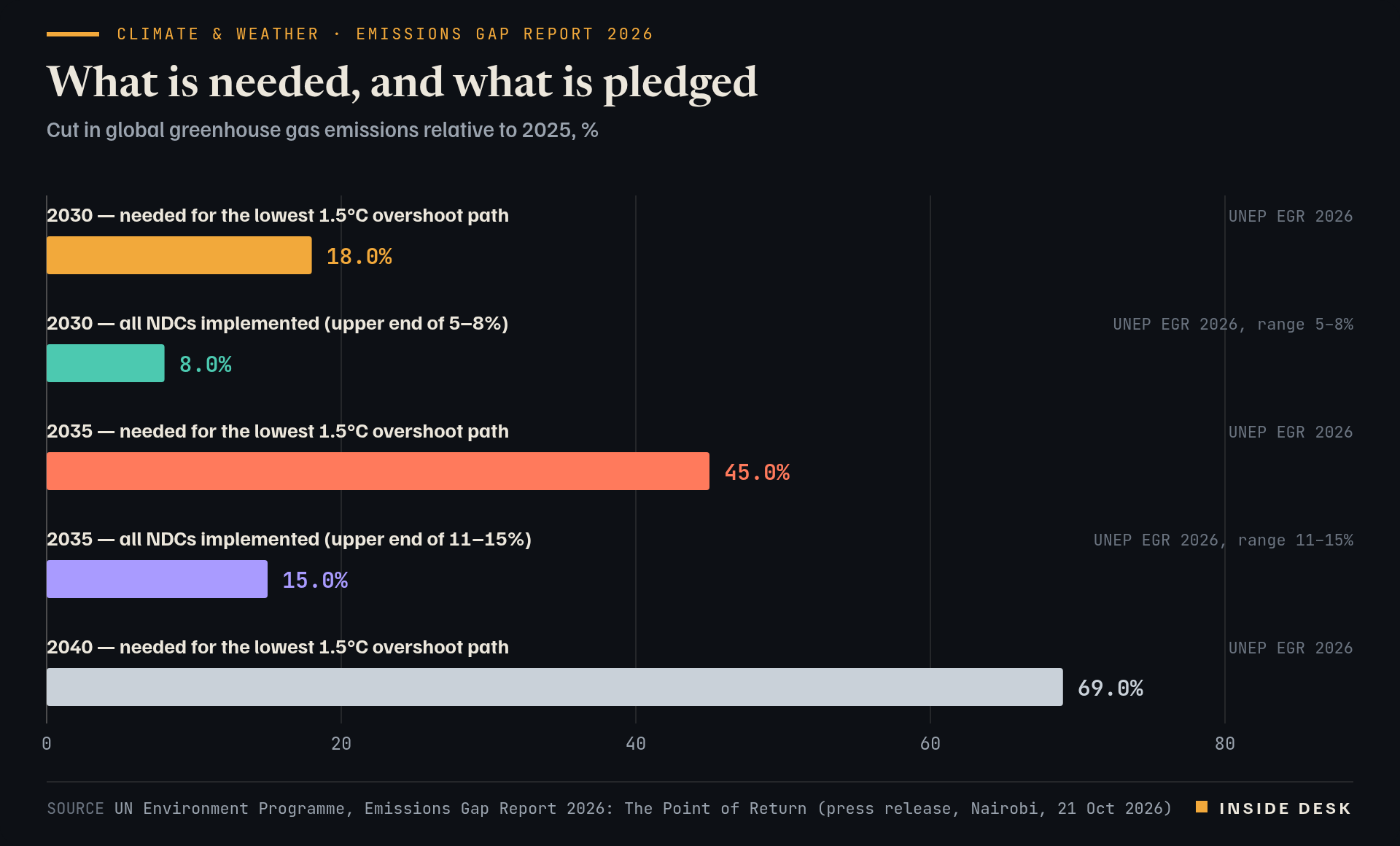
UNEP's Emissions Gap Report 2026, out today in Nairobi, says 1.5°C will be passed and sets out what it would take to come back below it. Read as a document, it is a ledger of required cuts against pledged ones, with a column of things that already worked.
Climate & Weather · 2 min · Read the piece →